
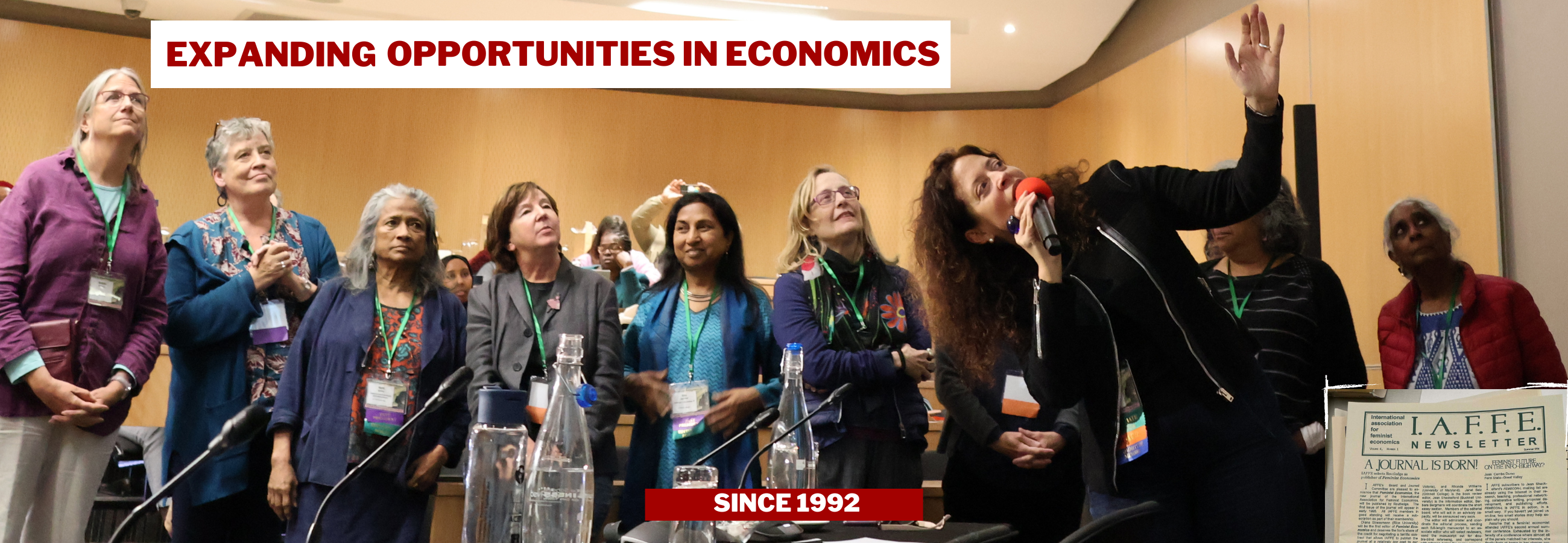
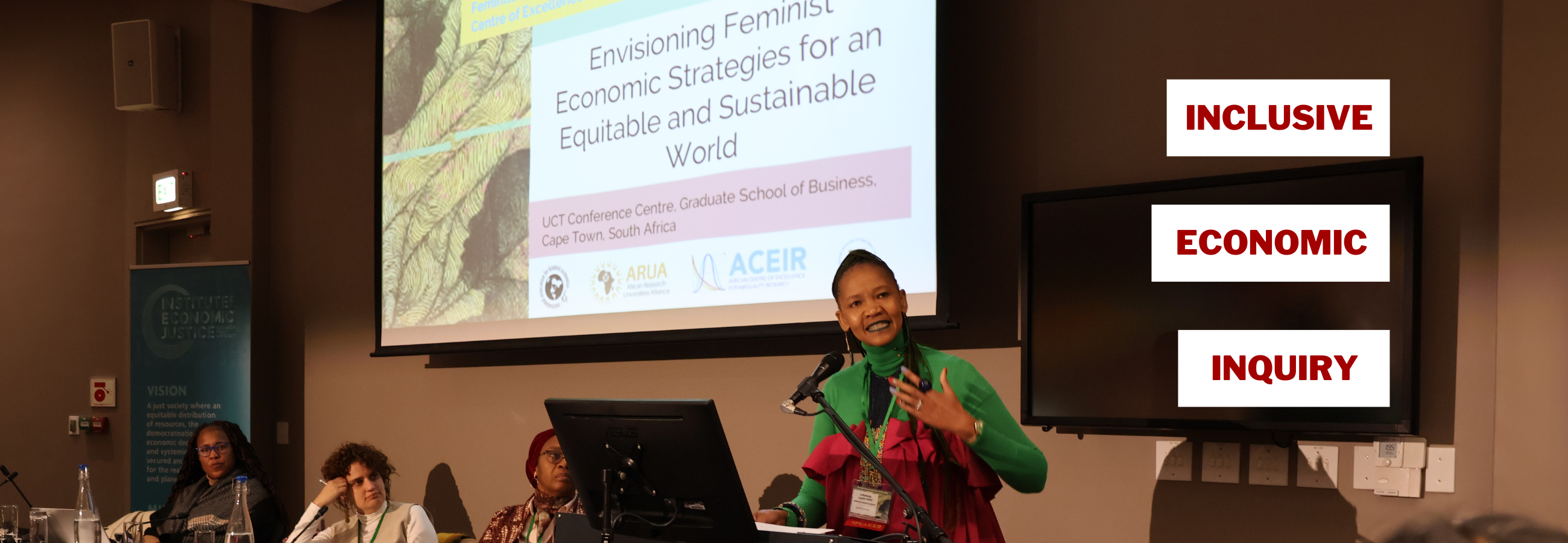
About and HistoryThe International Association for Feminist Economics (IAFFE) is a global community of academics, activists, policy theorists, and practitioners who share a common purpose: advancing gender-aware and inclusive economic research and policy analysis. Our aim is to foster gender equality and improve the well-being of all, particularly those facing the greatest socio-economic exclusion. The association’s award-winning journal, Feminist Economics, opens new areas of economic inquiry, fosters critical exchanges and enlarges and enriches economic discourse. IAFFE is a membership-based organization that was founded following the 1990 meetings of the American Economics Association in Washington, D.C. Since then, it has grown to include 800 members from over 90 countries. IAFFE’s influential network of scholars, activists, and advocates has defined and shaped feminist economics since the association’s founding and has had a tangible impact on scholarship and policy. “IAFFE was founded as a professional organization meeting the need and desire for an active, nonsexist organization for feminists in economics in a context in which that work was marginalized because of sexism in the discipline.” (Orozco Espinel and Gomez Betancourt, 2022) Upcoming Online EventsBenefits of Membership
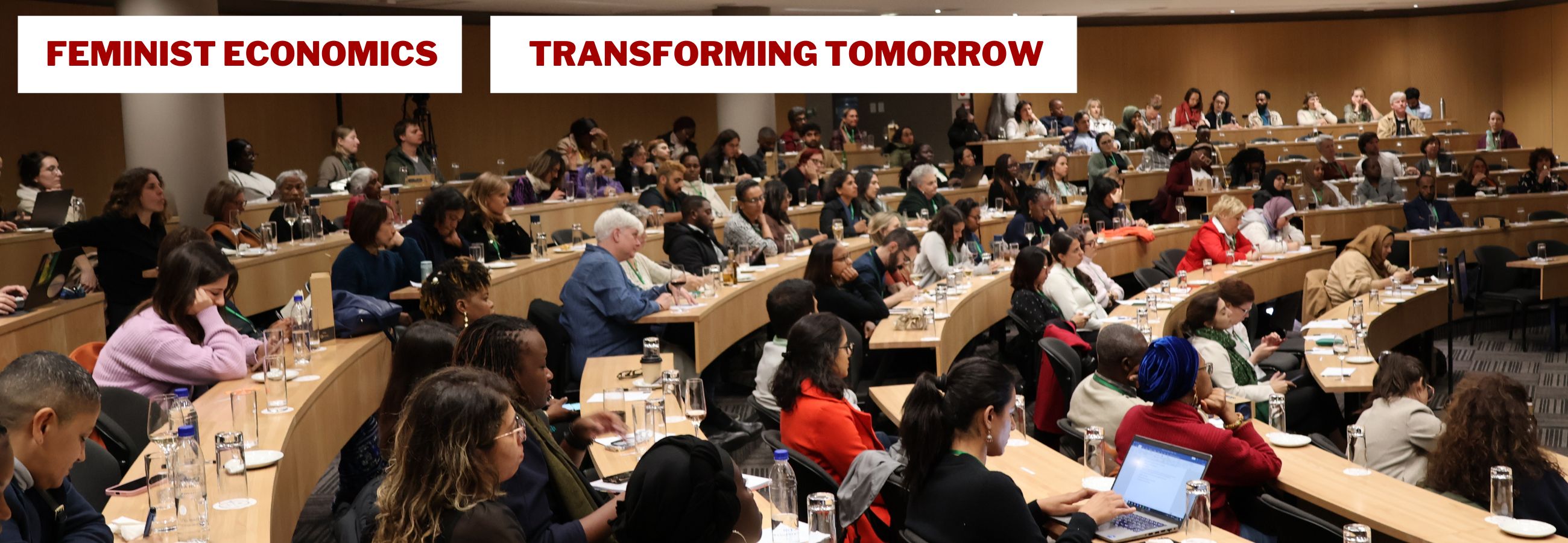
Join Today34th ANNUAL IAFFE CONFERENCEThe 34th Annual IAFFE Conference will take place in Cali, Colombia, at ICESI University from July 9–11, 2026, bringing together scholars, activists, and practitioners from around the world. The Call for Papers and details on conference activities will be announced later this year. Annual IAFFE Conferences |



International Association for Feminist Economics
The International Association for Feminist Economics is a 501(c)(3) non-profit. This website © 2023 by International Association for Feminist Economics (IAFFE) is licensed under CC BY-NC 4.0